FTC and 22 States Sue Amazon Over Secret Ad Surcharge Costing Billions
The FTC says Amazon promised second-price auctions but charged full maximum bids 80% of the time, secretly extracting billions from advertisers since 2019.

The Federal Trade Commission and 22 state attorneys general filed suit against Amazon on Monday, accusing the company of secretly and systematically overcharging the 1.2 million brands and sellers who paid to advertise on its platform — a scheme the government alleges may have extracted more than $20 billion from advertisers since 2019. The lawsuit is the third major federal action against Amazon in three years. It is also, notably, a Trump administration FTC action — filed by an agency that under its current chair has generally taken a more restrained posture toward major technology companies than its predecessor. That the commission moved against Amazon anyway, and did so alongside 22 state attorneys general in a bipartisan coalition, signals that the advertising conduct at issue was sufficiently documented and egregious to clear a bar the current commission has otherwise set high.
The lawsuit, filed in U.S. District Court for the Western District of Washington, targets a specific and technical mechanism at the heart of Amazon's advertising business: the system by which brands compete for sponsored placement in search results on Amazon's marketplace — the digital equivalent of prime shelf space in one of the world's busiest retail environments. What happens in that auction, the FTC argues, does not stay between Amazon and its advertisers. When sellers pay more than they realize to advertise their products, the cost of doing business on the platform rises. Those costs, in an environment where Amazon's marketplace handles roughly 40 percent of U.S. e-commerce, tend to flow downstream — absorbed into seller margins, passed on to consumers through higher prices, or both. The FTC's complaint is nominally about advertising fraud. Its downstream consequence, if the allegations hold, is a tax on commerce that American consumers have been paying without knowing it.
Amazon's advertising platform operates through an auction model. When a consumer searches for a product on Amazon, brands bid to have their product appear at the top of the results as a "sponsored" listing. The company had represented to advertisers that it used what is known as a second-price auction: under that model, the winning bidder pays not their own maximum offer, but rather one cent more than the next-highest bid. Second-price auctions are a standard mechanism in digital advertising designed to encourage advertisers to bid their true valuation of a placement, because winning bidders know they will not be penalized for bidding high. The FTC's complaint alleges that Amazon's actual practice diverged sharply from that representation.
According to the government, Amazon charged advertisers their full maximum bid — rather than just one cent above the runner-up — approximately 80 percent of the time. The mechanism functioned as a hidden surcharge: advertisers set their bids based on the understanding that they would pay a second-price outcome, not knowing that in most cases they would instead pay their stated maximum. The complaint further alleges that Amazon gave advertisers inadequate disclosures about how the pricing and auction terms for sponsored listings actually worked, leaving the 1.2 million brands and sellers who relied on the platform without the information they needed to make informed decisions about their bids.
Amazon's advertising business has grown into one of the largest digital ad platforms in the United States — the third-largest overall, behind only Google and Meta — generating approximately $56 billion in advertising revenue in 2025. The FTC's allegation that the auction manipulation may have yielded more than $20 billion in excess charges over roughly six years would, if proven, constitute one of the largest consumer protection violations in the history of digital advertising.
Amazon shares fell 2.7 percent on Monday following the lawsuit's filing, dropping below $260. The company issued a formal response disputing the central allegations. "The FTC claims advertisers were harmed because they didn't understand how our auction worked and therefore overpaid," Amazon said in a statement. "Not only do we properly describe our pricing and auctions to advertisers, but this claim fundamentally misunderstands how advertisers behave. Advertisers adjust bids based on real-world outcomes, not descriptions of auction mechanics." The company also argued that advertisers had saved more than $8 billion from 2021 to 2025 as a result of Amazon incorporating ad relevance into its auction algorithm rather than selecting placements on bid price alone. The company's defense does not address the downstream pricing question the FTC's complaint implicitly raises: whether the $20 billion in alleged excess charges ultimately found its way into the prices consumers paid for products on the platform.
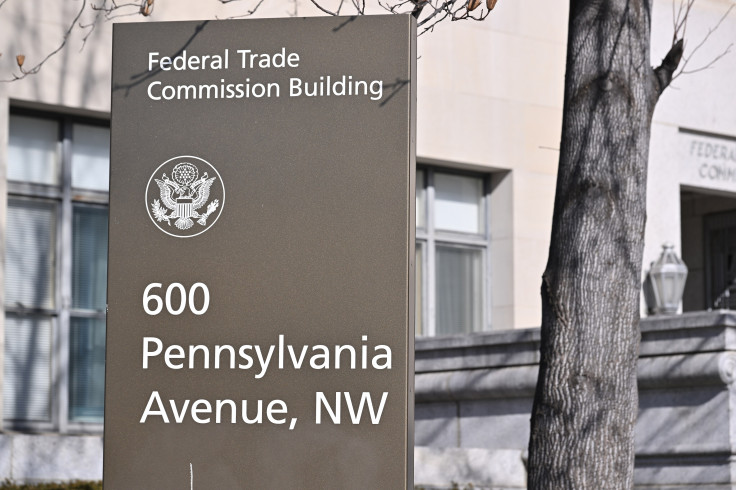
Monday's action marks the FTC's third major lawsuit against Amazon. The first, filed in 2023 alongside 17 state attorneys general, painted Amazon as a monopolist using interlocking anti-competitive strategies to maintain dominance over online retail — a case now set for trial early next year. The second produced a $2.5 billion settlement last year, in which Amazon resolved allegations that it had used deceptive design patterns to sign millions of consumers up for Prime subscriptions they did not want and then made cancellation deliberately difficult; the company paid a $1 billion civil penalty and $1.5 billion in consumer refunds. Two weeks before Monday's filing, Amazon separately agreed to pay $2.2 million to resolve allegations that it had violated the Fair Credit Reporting Act.
Taken together, the three FTC actions and the state co-plaintiffs who have joined them trace a consistent pattern: federal and state regulators arguing, from multiple angles simultaneously, that Amazon's dominance in e-commerce gives it pricing power over sellers, advertisers, and ultimately consumers that a competitive market would not sustain. The 2023 monopoly case makes that argument about the structure of Amazon's marketplace. Monday's advertising case makes it about the mechanics of how Amazon monetizes access to that marketplace. Both cases rest on the same foundation: that scale, when it becomes dominant enough, becomes a form of market power that operates below ordinary commercial visibility — and that the $20 billion question at the center of Monday's complaint is not ultimately about auction mechanics, but about who has been paying for Amazon's growth, and whether they knew it.
The addition of 22 state attorneys general to Monday's complaint reflects both the breadth of the alleged harm and the interest of state enforcers in extracting civil penalties under their own consumer protection statutes, which in some states run per violation rather than as a lump sum. The state-level penalties, if assessed individually for each instance of an overcharge across 1.2 million advertisers over a multi-year period, could theoretically produce liability far larger than the $20 billion figure cited in the federal complaint.
Amazon has not indicated whether it intends to settle the advertising lawsuit or contest it through trial. Given its $2.5 billion settlement of the Prime case — in which it neither admitted nor denied the underlying allegations — the company has shown some openness to resolution short of a verdict. Whether the $20 billion scale of the alleged harm in Monday's complaint makes a negotiated settlement financially and politically feasible will be one of the first strategic questions both sides face as litigation begins.
Originally published on HNGN
© {{Year}} HNGN, All rights reserved. Do not reproduce without permission.
- MOST POPULAR IN Business