

Malta Jury Acquits Businessman Accused of Masterminding Journalist Killing
Fenech's acquittal leaves the killing without a convicted mastermind — nine years after a car bomb that toppled a Maltese prime minister and shocked Europe.

A jury in Malta voted 8-1 Wednesday to acquit Yorgen Fenech, the prominent businessman prosecutors accused of masterminding the 2017 car bomb assassination of investigative journalist Daphne Caruana Galizia — closing the last criminal case in the plot with no one convicted as its architect, nine years after an explosion that reverberated through European politics and exposed the depth of impunity that can take root in a small state where power and wealth concentrate in a small number of hands.
Fenech, 42, had been indicted in 2021 on charges of complicity and criminal conspiracy in Caruana Galizia's murder. He pleaded not guilty throughout. The jury's verdict, delivered in Valletta, was decisive: eight jurors voted for acquittal, one for conviction. The prosecution had accused Fenech of having ordered and financed the killing. After the verdict was read, Fenech walked out of the courthouse into the afternoon sun, surrounded by supporters. He did not speak to waiting journalists.
Caruana Galizia was 53 years old when a remote-controlled bomb placed beneath her car detonated on October 16, 2017, as she drove away from her home near the village of Bidnija. The explosion killed her instantly. She had been one of Malta's most consequential journalists — her blog, Running Commentary, had for years been the country's most-read news source, and she had produced a body of investigative work targeting corruption at the intersection of politics, business and organized crime. At the time of her death, she was facing more than 40 libel suits filed by the subjects of her reporting, and she had exposed the offshore financial arrangements of figures in then-Prime Minister Joseph Muscat's inner circle, drawing extensively on the Panama Papers leak.
The killing triggered protests that ultimately brought down Muscat's government. An independent public inquiry, completed in 2021, concluded that the Maltese state bore responsibility for the assassination because it had allowed a culture of impunity to develop from the highest levels of government — creating conditions in which a journalist could be targeted with lethal force without adequate protection or deterrence.
Five other individuals were charged in the plot before Fenech. Three men — brothers George and Alfred Degiorgio and Vince Muscat, known as il-Kohhu — carried out the physical assassination and were convicted. Two others, brothers Lino and Robert Agius, were convicted of acting as intermediaries in the scheme. Fenech's conviction would have completed the chain of accountability by establishing criminal responsibility at what prosecutors argued was the top of the conspiracy. His acquittal leaves that chain severed at its highest link.
The Caruana Galizia family responded with a statement that was both personal and institutional in its force. "Nine years after Daphne's brutal assassination, the institutions have failed her again," the family said. They described the verdict as a denial of the justice she deserved and called on Maltese authorities and the European Union to examine how a case of this magnitude could result in an acquittal of the accused ringleader. The family has consistently maintained that the full truth of who ordered and financed the killing has not been publicly established, and that Fenech's prosecution represented the last formal opportunity to answer that question within the Maltese criminal system.
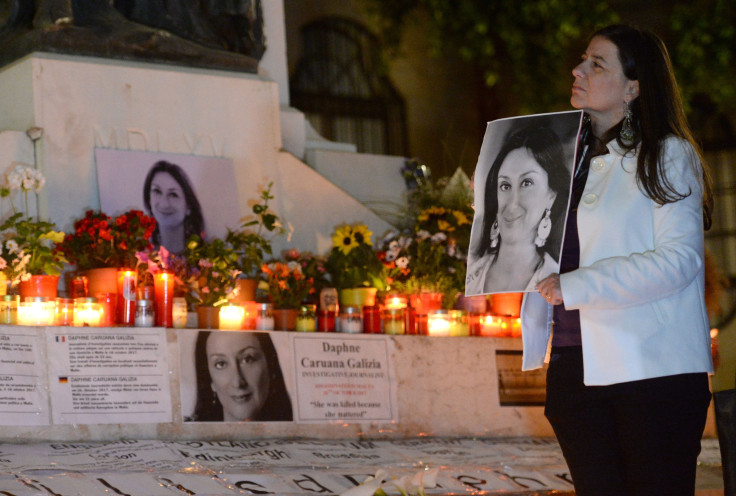
Press freedom organizations reacted immediately and with unusual unanimity. Reporters Without Borders called the verdict "a devastating blow to justice for journalists" and said it sent a dangerous signal to those who target reporters with violence. The Committee to Protect Journalists issued a statement calling for a full accounting of the case and expressing concern that the acquittal would reinforce the perception that perpetrators of journalist killings can escape accountability even in European Union member states. The European Federation of Journalists called the outcome "a failure of the Maltese justice system."
The verdict lands against a backdrop of sustained deterioration in press freedom metrics across Europe and globally. The murder of Caruana Galizia became, in the years after 2017, a defining reference point in the European debate about journalist safety and the legal frameworks available to protect it. The European Parliament passed resolutions in her name. The EU subsequently enacted the European Media Freedom Act in part as a response to the conditions her killing exposed. The acquittal of the man prosecutors called the case's architect raises the question of whether those institutional responses were built on a foundation the criminal justice system has now declined to confirm.
The Maltese prosecution acknowledged after the verdict that no appeal is available under Maltese law for criminal acquittals. The case is closed. Whether any parallel civil proceedings remain available to the Caruana Galizia family was not immediately clarified by their legal representatives.
What is now established: three men detonated the bomb. Two men served as intermediaries. The person prosecutors said paid for it walked out of court on Wednesday a free man. The woman whose work made her a target has been dead for nine years. No one has been convicted of wanting her dead.
Originally published on HNGN
© {{Year}} HNGN, All rights reserved. Do not reproduce without permission.
- MOST POPULAR IN World


