

DHS Secretary Mullin Lands Safely After Coast Guard Jet Loses Engine
The plane was flagged for its age; pilots said it was their first single-engine landing — putting Coast Guard fleet readiness under renewed scrutiny.

A U.S. Coast Guard C-37A jet carrying Department of Homeland Security Secretary Markwayne Mullin and 13 other passengers declared an emergency and made a single-engine landing at Ronald Reagan Washington National Airport on Wednesday afternoon after losing its right engine during a flight from Georgia to Washington — an incident that ended without injuries but immediately drew attention to the age and condition of the aircraft involved.
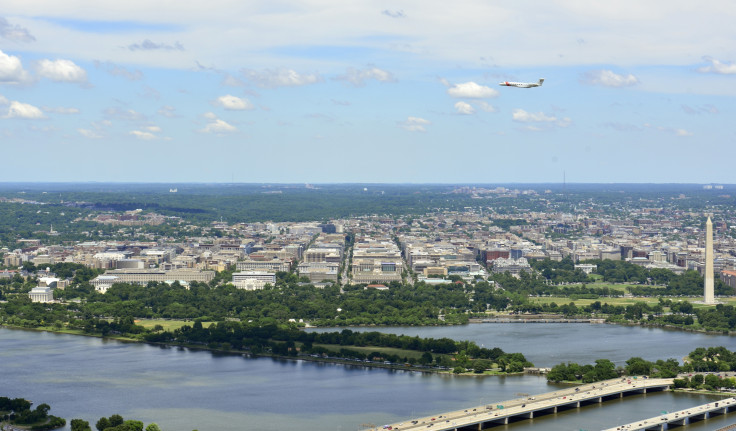
The emergency unfolded around 1:30 p.m. when the pilot contacted air traffic controllers at Reagan National. "We just lost our right engine and would like to declare an emergency and immediate landing at DCA," the pilot reported, according to audio recordings from the tower. Controllers were told the plane had 14 people on board and approximately 2.5 hours of fuel remaining. The aircraft was diverted immediately and landed without further incident.
Mullin confirmed the emergency in a post on X shortly after landing, praising the crew's composure in terms that will be widely quoted: "The United States Coast Guard pilots made the single engine landing feel routine. No panic, just straight professionalism." He added a detail that underscored the gravity of what the pilots had just managed: "After we landed, the pilots told me that was a first for them. We could not have been in better hands."
The C-37A is the military version of the Gulfstream V executive jet and is one of the aircraft routinely used to transport senior Coast Guard and DHS leadership. The Department of Homeland Security oversees the Coast Guard, making the secretary one of the plane's primary intended passengers. The aircraft that carried Mullin on Wednesday is among a group of Coast Guard planes that DHS formally flagged last year because of their age — a designation that signals maintenance concern and elevates the monitoring priority for the airframe but does not ground it from service.
That flagging detail resurfaced almost immediately in reporting on the incident, and it connects directly to one of the more contentious acquisition decisions of recent DHS leadership. When Kristi Noem served as DHS secretary, she faced significant scrutiny and congressional pushback over a decision to purchase two Gulfstream G700 jets for the Coast Guard — a far more expensive aircraft than the C-37A — at a reported cost of between $172 million and $200 million for the pair, a figure that exceeded initial projections by a substantial margin. Critics argued the acquisition prioritized executive comfort over fleet operational priorities. Defenders of the purchase argued the aging fleet required modernization and that the G700s represented a long-term investment in mission capability.
The tension between those two positions — whether expensive new aircraft represent justified modernization or executive overreach — runs directly through Wednesday's incident. The C-37A that lost an engine had been flagged for age-related concerns. New jets were purchased. The flagged aircraft remain in service. The pilots of a plane carrying the sitting cabinet secretary experienced their first single-engine emergency.
Mullin, 47, was confirmed as DHS secretary in February 2026, succeeding Noem. A former professional mixed martial arts fighter and three-term congressman from Oklahoma's Second Congressional District, he served in the Senate from 2023 until his cabinet appointment. His profile as DHS secretary has been shaped by the Iran war's domestic dimensions — border security, customs enforcement, maritime patrol — as well as by his role overseeing the Coast Guard during one of its most operationally demanding periods, given the service's missions in the Strait of Hormuz region and its responsibilities in the ongoing conflict.
His response to Wednesday's incident was characteristic of the political persona he has cultivated: direct, appreciative of military professionalism, and notably unbothered. The post on X did not mention the flagged aircraft status or the broader fleet readiness questions the incident raises. Those questions were left to be asked by others — and they were, within hours of landing.
The Coast Guard did not immediately issue a statement on the cause of the engine failure or the timeline for inspection of the aircraft. The Federal Aviation Administration, which coordinates with the military on incidents involving military aircraft operating in civilian airspace, was notified. Whether a formal incident investigation will follow, and what it will find about the aircraft's mechanical condition, remained to be determined as of Wednesday evening.
What is not in dispute is the outcome: the plane landed safely, the DHS secretary was unharmed, and the Coast Guard pilots performed a maneuver they had never performed before with a cabinet member on board. That the incident happened at all — on an aircraft already flagged for concern, carrying the secretary of a department that oversees the service, in a fleet whose modernization has been a subject of political controversy — is a set of facts that will be difficult to set aside regardless of what the investigation ultimately concludes.
Originally published on HNGN
© {{Year}} HNGN, All rights reserved. Do not reproduce without permission.
- MOST POPULAR IN World


